
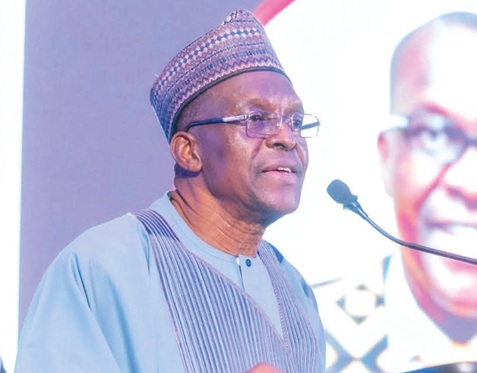

The Speaker of Parliament, Alban Sumana Kingsford Bagbin, has announced plans to introduce a comprehensive digital platform that will afford journalists online access to parliamentary records and institutional information before the end of 2026.
The proposed initiative, which forms part of Parliament’s broader institutional reforms, is expected to dismantle bureaucratic impediments associated with information retrieval and minimise journalists’ dependence on formal Right to Information (RTI) applications to obtain parliamentary documents.
Mr Bagbin made the disclosure at the 30th Ghana Journalists Association (GJA) Media Awards held in Accra on Saturday, November 7, 2026, where he outlined Parliament’s commitment to strengthening institutional transparency, enhancing media relations and broadening public access to official information.
Addressing distinguished media practitioners at the ceremony, the Speaker indicated that the proposed digital infrastructure would facilitate seamless access to parliamentary information, enabling journalists to discharge their professional responsibilities without necessarily making physical visits to the legislative chamber.
“Very soon, you don’t even need to walk to Parliament. With a touch of a button, you can access all information you need from Parliament. That is what is going to happen before the end of this year,” he assured.
He explained that the intervention was intended to eliminate unnecessary administrative bottlenecks and establish a more responsive information-sharing system that would facilitate timely and comprehensive media coverage of parliamentary activities.
Beyond the digital access initiative, Mr Bagbin disclosed that Parliament had undertaken a strategic restructuring of its communication architecture to reinforce institutional engagement with journalists and the general public.
He revealed that the Public Affairs Department had been strengthened, while dedicated Public Engagement and Media Relations departments had been established alongside the Citizens Bureau to improve information dissemination and deepen public participation in parliamentary affairs.
The Speaker characterised the media as an indispensable pillar of Ghana’s democratic architecture, acknowledging its instrumental role in interpreting legislation, scrutinising parliamentary deliberations and holding elected representatives accountable for their stewardship.
He consequently urged journalists to uphold accuracy, fairness and professional integrity in their reportage, assuring them that Parliament remained receptive to constructive engagement with the media.
“The House is your house. Walk in any time with the confidence and pride that an heir apparent enters the palace,” he stated.
Mr Bagbin further emphasised the symbiotic relationship between Parliament and the media, observing that independent journalism remained fundamental to entrenching transparency, institutional accountability and democratic governance.
He commended Ghanaian journalists for their tenacious investigative work in exposing corruption, human rights violations, illegal mining, popularly known as galamsey, and child abuse within educational institutions.
According to him, such investigative interventions had been instrumental in uncovering malfeasance, influencing policy decisions and compelling public institutions to demonstrate greater accountability in the discharge of their mandates.
On the welfare of media practitioners, the Speaker expressed concern over the precarious conditions confronting journalists, particularly inadequate remuneration, employment insecurity, unfavourable working environments and threats to their personal safety.
He maintained that journalists deserved dignified conditions of service, institutional protection and professional autonomy to execute their responsibilities without intimidation or undue interference.
In what could become a major legislative intervention for the media fraternity, Mr Bagbin disclosed Parliament’s preparedness to collaborate with the Ghana Journalists Association to formulate a Private Member’s Bill aimed at establishing minimum conditions of service for journalists.
He explained that the proposed legislative instrument would be developed through consultations with the GJA and other relevant stakeholders, rather than awaiting an initiative from the Executive.
The Speaker pledged to champion the proposal and ensure its eventual realisation, insisting that the initiative should not degenerate into another unfulfilled political commitment.
He nevertheless cautioned that legislative provisions alone would be insufficient to guarantee the safety of journalists, urging law enforcement agencies, political actors, media proprietors, traditional authorities and the general public to demonstrate greater respect for media practitioners and safeguard journalistic independence.
Mr Bagbin also admonished journalists to remain resolute in upholding professional ethics, particularly in an era where digital platforms have accelerated the proliferation of misinformation, fabricated narratives and deliberately manipulated content.
He warned that the dissemination of falsehoods could undermine public confidence, distort democratic discourse and aggravate societal divisions.
Drawing inspiration from Pope Leo XIV, the Speaker encouraged media practitioners to resist individuals and groups who deliberately exploit misinformation to manipulate public opinion, propagate divisive narratives and undermine social cohesion.
The 30th Ghana Journalists Association Media Awards was held under the theme, “Celebrating Excellence, Advancing Media Freedom and Combating Hate Speech in the Digital Age”.
The ceremony commemorated three decades of recognising journalistic distinction and celebrating the media’s enduring contribution to Ghana’s democratic evolution.