
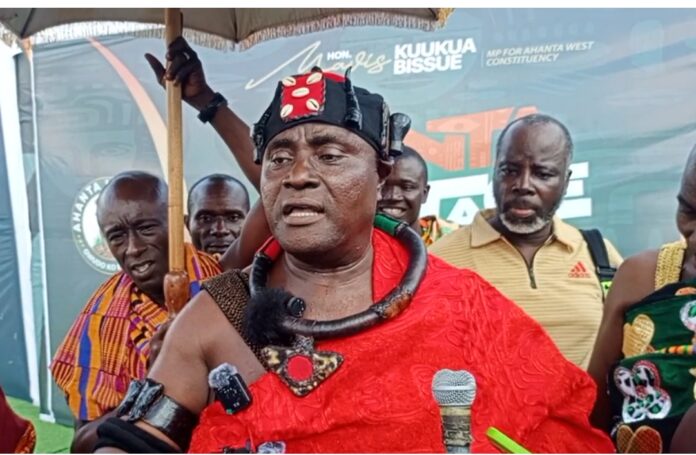

The Paramount Chief of the Nzema Kotoko Traditional Area, Tumivole Awulae Kaku Aka III, has called for comprehensive reparative justice for the Ahanta and Nzema people, arguing that decades of historical injustice, political marginalisation and developmental neglect must be addressed alongside Africa’s broader quest for reparations.
Speaking in an interview with 1960news.com on the sidelines of the launch of Ahanta Heritage Month 2026, the revered traditional ruler said President John Dramani Mahama’s call for reparations for Africa at the United Nations should also inspire a national conversation on the historical wrongs suffered by indigenous communities within Ghana.
According to him, while the campaign for reparations rightly seeks justice for the transatlantic slave trade and colonial exploitation, communities such as Ahanta and Nzema that bore the brunt of colonial oppression equally deserve recognition and redress.
Awulae Kaku Aka III recounted the execution of Ahanta King Badu Bonsu II by Dutch colonial authorities in 1838 and the subsequent arrest of King Kaku Aka of Nzema on April 18, 1848, after resisting colonial rule.
He explained that King Kaku Aka, whom he described as the brother of King Badu Bonsu II from the Anona royal family, was imprisoned at Cape Coast Castle, where he was denied justice and freedom.
The paramount chief said the persecution of the two monarchs reflected a deliberate campaign against the ruling family and symbolised the wider suffering endured by the Ahanta and Nzema people under colonial rule.
“The people have suffered serious injustice and mistreatment over the years,” he said, noting that colonial interference also weakened traditional institutions.
He argued that reparative justice should extend beyond financial compensation to include deliberate policies that address the historical and developmental disadvantages facing Ahanta and Nzema communities.
Despite being endowed with abundant natural resources, he said both areas continue to experience inadequate infrastructure, unemployment and limited socio-economic opportunities.
Awulae Kaku Aka III further criticised successive governments for failing to ensure that resource-rich communities receive a fair share of the benefits generated from their lands.
“Our resources should benefit our own people,” he stressed, while questioning why many strategic public appointments in the region often go to non-indigenes.
The paramount chief also commended Ahanta West MP Mavis Kuukua Bissue for championing Ahanta Heritage Month, describing the initiative as a landmark platform to celebrate the history, culture and aspirations of the Ahanta people.
According to him, the celebration provides an opportunity for Ahanta and Nzema communities to reclaim their identity, strengthen unity and advocate for accelerated development.
He urged both ethnic groups to embrace their languages and cultural heritage, warning that the loss of indigenous languages would erode their identity.
“There is nobody’s language that is better than yours. Be proud that you are Ahanta,” he said, while encouraging the Nzema people to preserve and promote their own cultural traditions.
Awulae Kaku Aka III further called for greater unity between the Ahanta and Nzema people, insisting that a united front would strengthen their political influence and improve their ability to advocate for employment, education, infrastructure and other development priorities.
Addressing the youth, he urged them to reject divisive politics, safeguard their heritage and actively contribute to the future of their communities.
“As long as we remain united, it will be difficult for anyone to weaken us,” he said, urging the people to use Ahanta Heritage Month as a rallying point for justice, recognition and sustainable development.