
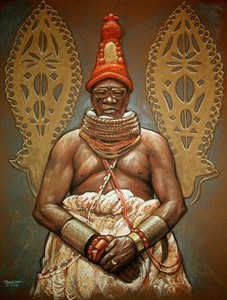

The history of Nzemaland is replete with accounts of royalty, resistance, betrayal and the preservation of ancestral heritage. However, few historical narratives are as compelling as that of Awulae Kaku Aka I, the revered king of the Nzema Kingdom, whose confrontation with British colonial interests in 1848 culminated in the invasion of his kingdom, his capture and eventual death in captivity, and the disappearance of an alleged ancestral royal treasure.
More than a century and a half after these events, the circumstances surrounding the British invasion, the reported seizure of royal possessions and the mysterious treasure that the colonial expedition allegedly failed to uncover continue to provoke historical curiosity.
While the British portrayed their military campaign as an intervention to liberate the Nzema people from an allegedly oppressive monarch, the commercial ambitions and strategic interests associated with the expedition raise important questions about the true motivations behind the invasion.
At the centre of this historical account is Francis Swanzzy, a British trader whose commercial interests in the region were reportedly intertwined with the expedition that brought the reign of Awulae Kaku Aka I to a tragic end.
British accusations against Awulae Kaku Aka I
In 1848, the British accused Awulae Kaku Aka I of enslaving and exploiting his own subjects, portraying the Nzema monarch as a tyrannical ruler whose alleged excesses justified foreign intervention.
These accusations became a central justification for the British campaign against the Nzema Kingdom. However, the circumstances surrounding the expedition also point to the considerable economic interests Britain had developed along the West African coast.
Nzemaland was strategically positioned and endowed with valuable resources that attracted foreign merchants seeking to expand their commercial networks and establish access to new markets.
Francis Swanzzy, a British trader with commercial ambitions in the region, reportedly sought to expand his trading interests and secure access to valuable commodities. The economic potential of Nzemaland consequently made the kingdom an attractive destination for foreign commercial interests.
The convergence of commercial ambitions, political influence and colonial expansion raises questions about whether the British expedition was motivated exclusively by humanitarian concerns or whether accusations against the king also served as a pretext for advancing wider economic interests.
Although the allegations against Awulae Kaku Aka I remain part of the historical narrative, the devastating consequences of the ensuing campaign warrant a broader examination of the political and commercial circumstances that informed the British invasion.
Francis Swanzzy’s expedition and the invasion of Nzemaland
The confrontation between the British and the Nzema Kingdom reportedly escalated when Francis Swanzzy led an expeditionary force of approximately 6,000 troops into Nzemaland in 1848.
The military campaign marked a devastating turning point in the kingdom’s history, as British forces advanced into Nzema territory, attacking communities and inflicting considerable suffering on the local population.
The invasion reportedly resulted in the destruction of settlements, the loss of lives and the disruption of established traditional and political structures.
For the people of Nzemaland, the expedition represented a direct assault on their sovereignty, traditional authority and ancestral heritage. The overwhelming military strength of the British forces placed the kingdom under immense pressure, eventually paving the way for the capture of its reigning monarch.
Awulae Kaku Aka I was reportedly betrayed by one of his own advisers, an act that weakened his position and facilitated his eventual capture by the British.
The monarch was subsequently held as a hostage and died while in British custody, bringing a tragic conclusion to his reign and leaving behind a kingdom profoundly affected by the invasion.
His death represented not only the loss of a traditional ruler but also a defining moment in the political history of Nzemaland, with far-reaching consequences for its people and traditional institutions.
British seizure of royal treasures following the king’s capture
Following the defeat of Awulae Kaku Aka I, the British expedition reportedly turned its attention to the acquisition of valuable possessions belonging to the Nzema royal establishment.
The spoils of the campaign were said to have included gold ornaments, ceremonial swords, cutlasses, intricately carved furniture and other objects associated with the wealth and authority of the kingdom.
In accounts attributed to Swanzzy, the distribution of the captured possessions reportedly presented considerable difficulties, particularly in determining how the valuable items should be apportioned among the British officials and participants in the expedition.
Swanzzy himself reportedly acquired a gold skull-cap, while other British officials received valuable royal artefacts, including a beautifully carved chair and a ceremonial sword.
One of the most remarkable objects associated with the campaign was a golden tiger, reportedly taken from the Nzema royal establishment and sent to Queen Victoria in Britain.
The reported removal of these possessions raises profound questions about the circumstances under which culturally significant African artefacts were acquired during the colonial era.
Beyond their monetary value, the objects embodied the historical identity, royal authority and artistic ingenuity of the Nzema people. Their reported appropriation therefore represented a loss that extended beyond material wealth to encompass the cultural and historical inheritance of the kingdom.
The ancestral treasure the British could never find
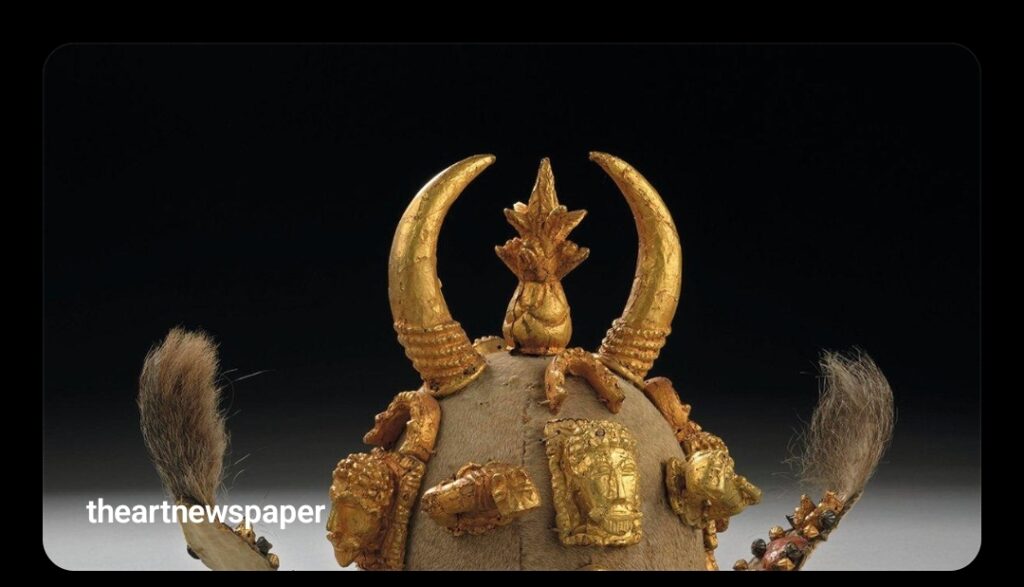
Perhaps the most intriguing aspect of the British expedition into Nzemaland was the alleged existence of an extensive ancestral treasure belonging to Awulae Kaku Aka I, which the colonial authorities reportedly believed had been concealed in a secret location.
Despite their military victory and the valuable possessions they had already acquired, the British remained convinced that the monarch possessed an enormous collection of ancestral wealth that had not been recovered.
The alleged treasure was believed to comprise valuable royal possessions accumulated over generations, representing the economic strength, historical legacy and traditional authority of the Nzema royal establishment.
Determined to uncover the location of the hidden wealth, the British reportedly questioned the captured king and attempted to persuade him to disclose the whereabouts of the treasure.
However, their efforts proved unsuccessful, as Awulae Kaku Aka I reportedly refused to reveal the secret.
Even after the monarch’s capture and subsequent death in captivity, the British were unable to establish the precise location of the alleged treasure.
Swanzzy reportedly acknowledged months after the expedition that the treasure remained undiscovered, leaving the British to speculate that the king might have secretly buried the valuables at a location known only to him.
The inability of the British to locate the alleged wealth has become one of the most fascinating aspects of the historical account, particularly because the expedition had already resulted in the acquisition of several valuable royal possessions.
Whether the treasure was concealed in a remote location, entrusted to loyal subjects or moved elsewhere before the invasion remains unknown.
What makes the account particularly remarkable is the king’s reported determination to preserve the secret, even in the face of captivity and the immense pressure exerted by his captors.
Awulae Kaku Aka I eventually died without disclosing the treasure’s whereabouts, leaving behind an enduring mystery that continues to inspire questions about the fate of the royal wealth of Nzemaland.
The king portrayed as a tyrant or a victim of colonial ambition?
The historical portrayal of Awulae Kaku Aka I as a tyrannical monarch whose alleged oppression justified British intervention presents an important opportunity to scrutinise how colonial powers documented and interpreted their military expeditions in Africa.
For the British, the campaign could be presented as a victory against an allegedly oppressive ruler and an intervention undertaken in the interest of the local population.
However, the destruction reportedly inflicted on Nzemaland, the death of its king in captivity and the acquisition of valuable royal possessions complicate that interpretation.
The commercial interests associated with Francis Swanzzy and the strategic importance of the kingdom also raise questions about the extent to which economic considerations influenced the British expedition.
The events surrounding the invasion demonstrate the importance of examining colonial narratives beyond the accounts of those who conducted the campaigns, particularly when the perspectives of the affected African communities may have been inadequately represented.
For the Nzema people, the consequences of the expedition extended far beyond the removal of a monarch. They included the loss of lives, the disruption of traditional authority and the reported appropriation of valuable possessions that formed part of their cultural heritage.
The contrast between the British portrayal of victory and liberation and the suffering associated with the invasion underscores the importance of considering the experiences of the communities directly affected by colonial intervention.
Awulae Kaku Aka I’s ceremonial cutlass at the British Museum
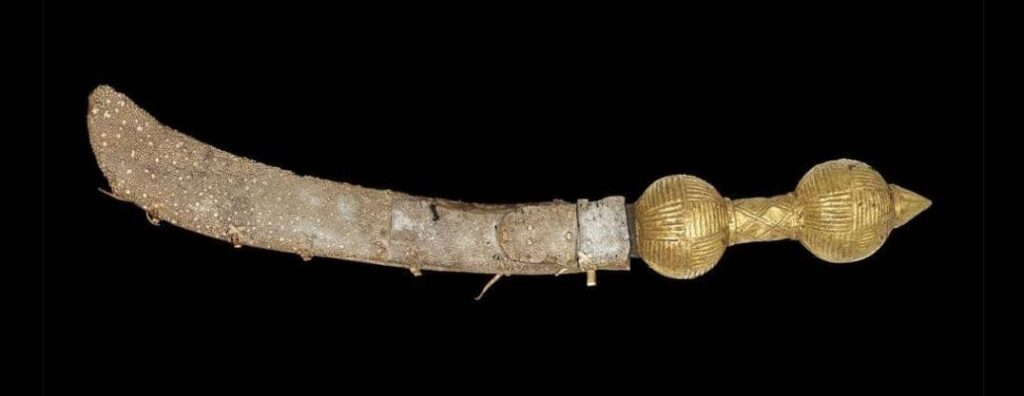
One of the surviving objects reportedly associated with the 1848 British expedition is the ceremonial cutlass of Awulae Kaku Aka I, said to have been taken by Francis Swanzzy and now held at the British Museum.
The reported presence of the royal artefact in Britain, thousands of kilometres away from its place of origin, has brought renewed attention to the question of African cultural heritage acquired during colonial military campaigns.
For the people of Nzemaland, the cutlass represents more than a historical weapon. It is a tangible connection to their ancestral past, traditional institutions and the legacy of a monarch whose reign was brought to a tragic end during a period of foreign intervention.
Its reported removal raises fundamental questions about cultural ownership, historical accountability and the responsibilities of institutions that hold African artefacts acquired under colonial circumstances.
How did an important royal possession from Nzemaland end up in a British museum? Under what circumstances was it taken from the kingdom? And should the people whose heritage it represents have the opportunity to reclaim it?
These questions resonate with the broader international debate surrounding the restitution of African artefacts acquired through conquest, coercion and other unequal colonial arrangements.
The reported circumstances surrounding the cutlass make it particularly important for further historical investigation, including the examination of colonial records and museum documentation.
For Nzemaland, the issue extends beyond the possession of an individual artefact. It concerns the preservation of collective memory, the recognition of historical experiences and the restoration of cultural objects to their communities of origin.
The secret the king took to his grave
Despite the reported acquisition of gold ornaments, ceremonial weapons and other royal possessions, the ancestral treasure believed to have belonged to Awulae Kaku Aka I has remained an unresolved historical mystery.
Several possibilities could explain its disappearance. The treasure may have been concealed in a secret location before the British invasion, transferred to trusted individuals or dispersed amid the turmoil that accompanied the military campaign.
It is also possible that the valuables were eventually lost, destroyed or absorbed into private collections without leaving a trace that could reliably connect them to the king.
Without further documentary evidence or credible archaeological discoveries, however, the precise fate of the treasure remains uncertain.
Its disappearance has nevertheless become one of the most captivating aspects of the king’s story, symbolising the limits of colonial power and the enduring ability of historical secrets to survive the passage of time.
The British may have succeeded in defeating the monarch and acquiring some of the kingdom’s valuable possessions, but the treasure they reportedly pursued remained undiscovered.
Whether it still lies beneath the soil of Nzemaland or was moved to an unknown destination is a question that may require further historical research, oral accounts and archaeological investigation to answer.
Preserving the history of Nzemaland for future generations
The story of Awulae Kaku Aka I is an important reminder of the need to preserve and critically examine the histories of African kingdoms whose experiences of colonialism were often documented predominantly by foreign observers.
His reign, the British invasion, his betrayal and captivity, the removal of royal possessions and the mystery surrounding his ancestral treasure collectively form a compelling narrative of power, resistance, loss and cultural identity.
For the people of Nzemaland, preserving this history is essential to ensuring that future generations understand the sacrifices, struggles and experiences that shaped their ancestral homeland.
It also highlights the importance of documenting oral traditions, examining colonial records and encouraging historical scholarship that gives due consideration to African perspectives.
The reported presence of the king’s ceremonial cutlass at the British Museum further strengthens the case for sustained engagement with questions of cultural restitution and the rightful preservation of African heritage.
Ultimately, the story should not be confined to the military triumphs of colonial forces or the accounts of those who led the expedition. It must also encompass the experiences of the people whose kingdom was invaded and whose cultural treasures were reportedly taken.
More than a century and a half after the events of 1848, the legacy of Awulae Kaku Aka I continues to provoke reflection on the consequences of colonial expansion and the importance of reclaiming historical narratives.
The gold and royal possessions reportedly removed from Nzemaland may now be scattered across distant institutions and private collections, but the kingdom’s history remains an inseparable part of the identity of its people.
And perhaps the most enduring question surrounding the reign of Awulae Kaku Aka I is not simply what the British took from Nzemaland, but what became of the ancestral treasure they could never find.
Where, indeed, did Awulae Kaku Aka I hide his treasure, and will the secrets of the lost royal wealth of Nzemaland ever be uncovered?